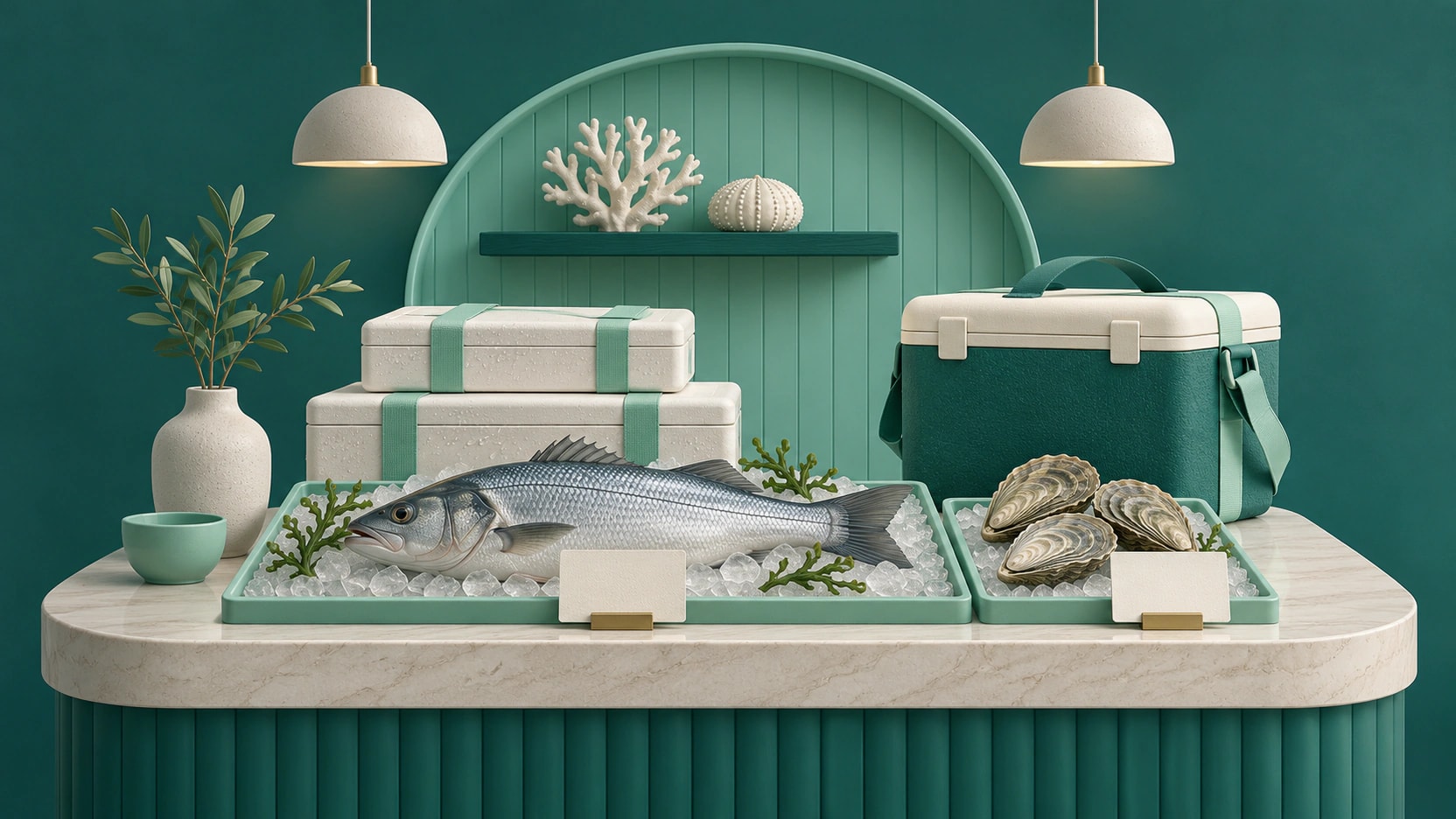
A seafood shopper needs more than a photograph and a price. Species, preparation, pack size, fresh or frozen status and collection options can change the purchasing decision. A store may also receive a different catch tomorrow. The website must make those changes manageable without confusing an attractive product page with a promise that the fishmonger can fulfil every order.
Bubulla, SeaFood Company and Storefront offer three WordPress theme foundations for this job. Two supply specialist visual presentation, while Storefront provides a general WooCommerce base. The comparison concerns retail seafood information, preparation variants and chilled-order handoffs, rather than restaurant table bookings. Official sources were reviewed on 23 November 2026. We did not install these themes, place orders or test inventory, shipping or food-handling systems.
Define the seafood catalogue first
Decide whether each product is sold as a fixed pack, a whole fish with an approximate weight, or a final weighed amount confirmed by staff. A theme can display information around those choices, but the product and payment configuration must match the business’s actual process. Do not use a variable-looking demo selector as evidence that weighed final totals are supported.
Maintain species names, preparation choices, pack units and availability in consistent locations. Editorial catch notes can link to products, while fulfilment instructions explain collection cutoffs and delivery areas. Keep product information reviewable by the staff who know the current stock. This is a more specific task than choosing a general grocery-store colour scheme.
| Theme | Editing approach | Useful fit | Price checked |
|---|---|---|---|
| Bubulla | Classic WPBakery presentation | Seafood and raw-food retail catalogue | US$69 Regular License |
| SeaFood Company | Classic WPBakery and food layouts | Seafood retail with editorial recipes | US$69 Regular License |
| Storefront | Classic WooCommerce foundation | Custom, focused product catalogue | Free theme; extensions separate |
Bubulla
Bubulla by like-themes explicitly covers seafood alongside other raw-food businesses. Its item page offers WooCommerce catalogue, product, cart and order presentation. The live compatibility table and vendor manual identify WPBakery. Broad category filters mentioning Elementor should not be used to infer this item’s builder.
The useful starting point is a store-oriented visual framework that can accommodate fish, shellfish and prepared packs. Replace meat-specific demo labels with a coherent seafood taxonomy. A practical editor exercise is to change a product from available to unavailable, update preparation information and check that the relevant archive card still tells the truth.
The live item showed US$69, a 6 November 2026 update and WooCommerce 10 compatibility. Its manual explains updating the bundled builder through the theme package. The manual requires LT-Core, LT-Ext and WPBakery; confirm their current versions and any separate direct-update entitlement. This remains a classic theme even though the listing marks Gutenberg optimization. No verified catch-allocation, temperature monitoring or delivery-capacity engine was established. Treat those as separate operational requirements, with author support covering the item rather than custom logistics.
SeaFood Company
SeaFood Company by ThemeREX combines seafood-store and restaurant presentation. The vendor describes WPBakery, WooCommerce integration and recipe content, with sliders and grid components. For a fishmonger that publishes preparation ideas alongside products, that editorial layer can be useful. Select retail navigation deliberately instead of leaving restaurant reservations as the primary action.
Its strength is the connection between explanatory food content and a shop. A recipe could link to a suitable pack while making portions and availability clear. Its limitation is the breadth of the demo: restaurant menus, galleries and retail pages can produce unnecessary maintenance if copied wholesale. Keep the store’s real order route prominent.
The US$69 purchase includes future item updates and six months of support. The live side table still lists WordPress 6.9 and WooCommerce 9 branches, so compatibility with a newer intended stack needs an explicit answer. A promotional list grouping WPML with other plugins does not prove an included WPML licence. Verify builder, grid and slider entitlements individually. Gutenberg-related wording does not make this a native Full Site Editing theme or a system for managing chilled inventory.
Storefront
Storefront from WooCommerce is a free classic theme built around WooCommerce. The official directory returned version 4.6.2 and identifies Automattic as its author. It supplies a general store foundation rather than a seafood starter design. The theme has no compulsory paid Pro edition, although optional extensions, child themes and operational services may cost extra.
The main advantage is choosing product structure before decorative features. A retailer can establish categories for species or preparation, create clear product descriptions and commission a design around that catalogue. WooCommerce supplies commerce functionality; the free theme itself does not create seafood-specific fields, a cold-delivery scheduler or a weighed-order payment process.
The limitation is implementation effort. The team must design the archive cards, select any additional product-field tools and verify the checkout flow. A simple presentation can work well when stock changes frequently, provided editors can update the facts without rebuilding a page. Confirm any required WooCommerce extension against the current versions, intended payment gateway and site count rather than assuming a theme recommendation guarantees integration.
Work through one realistic order
Use a written example before choosing plugins: a customer wants a whole fish cleaned for collection on Friday. Identify where approximate weight, preparation choice, requested date and staff confirmation live. If the final total changes after weighing, decide when payment is authorized or collected. These are business and commerce decisions that the theme’s layout must communicate clearly.
For shellfish or mixed boxes, define the unit being sold and explain substitution policy before checkout. Product photographs should match the offered format, including whether packaging and accompaniments are included. A seasonal catch story should not promise stock merely because its product link remains visible. Set an editorial owner for removing obsolete availability messages.
A collection or delivery calendar must have a real capacity owner. If an external service allocates slots, make that handoff explicit and review what happens when the service is unavailable. Theme compatibility alone does not establish stock synchronization. Keep staff’s authoritative order record separate from free-text enquiries so duplicate requests are not treated as confirmed purchases.
Count the recurring costs
Keep an agreed catalogue vocabulary for staff: product unit, preparation, availability and fulfilment note. When the same fact appears in a banner, description and checkout message, assign one owner to reconcile it. This reduces the chance that yesterday’s catch announcement contradicts today’s product record, regardless of which theme supplies the surrounding design.
For Bubulla and SeaFood Company, the displayed marketplace offer is for one end product. Additional independent shops need appropriate licences. Support extension, hosting, payment fees, delivery tools and product-information maintenance are separate costs. The supported-item period is six months; obtain a current later renewal quote instead of carrying forward an introductory support-extension price.
Storefront removes the initial theme purchase but leaves those operational costs. A paid delivery-slot tool may be justified; several overlapping merchandising plugins may simply increase update work. Ask who will verify product templates after a WooCommerce update and who can restore clear ordering information if a promotional component fails. Refer to the marketplace licence overview and support policy for the commercial items.
Our grocery store comparison covers broader basket shopping. The butcher shop comparison provides another perspective on pack and preparation information, while seafood adds its own species, catch and availability questions.
Choose the catalogue your team can keep accurate
Shortlist Bubulla for a specialist retail visual framework with WPBakery maintenance. Consider SeaFood Company when recipes and shop content belong together and its current compatibility is confirmed. Choose Storefront when a custom WooCommerce foundation better suits the operation. The practical winner is the theme that supports accurate product information and an understandable fulfilment process as stock changes.