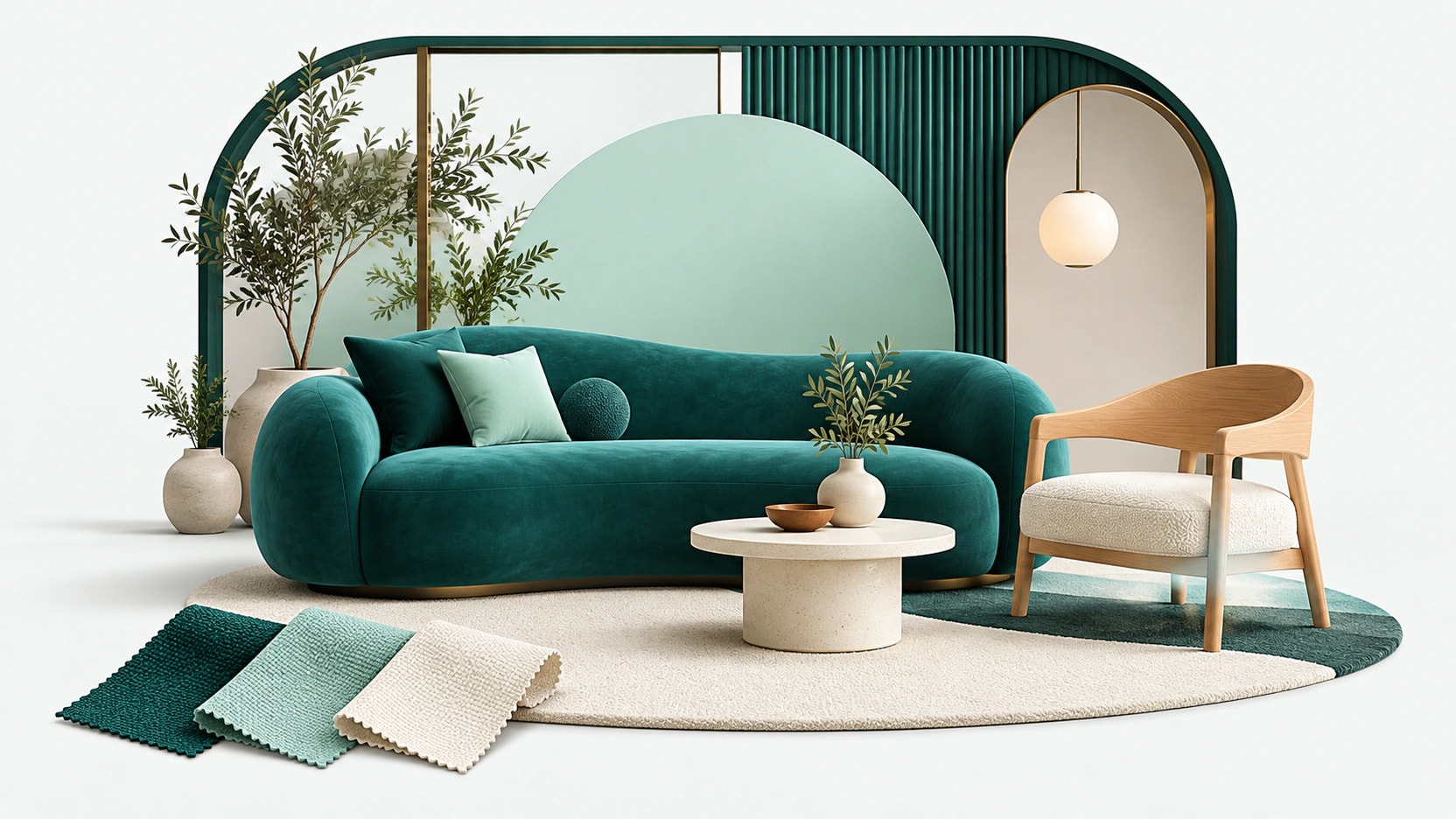
A furniture shopper needs more than an attractive room photograph. They need to distinguish the chair’s finish from its upholstery, understand its dimensions, and know whether delivery means a parcel at the door or an arranged two-person installation. A theme can make those decisions easier to navigate, but it cannot create reliable warehouse stock or promise a delivery date that the retailer has not confirmed.
Drile, Konte and Rey are three WordPress themes worth comparing for that storefront layer. The useful distinction is how each presents a furniture catalogue, which editing tools staff inherit, and what remains dependent on WooCommerce, companion plugins or a separate fulfilment system. This is an assessment of official listings and documentation checked on 27 October 2026, not an installation test or performance benchmark.
What a furniture-store theme should handle
Start with the product record. A sofa might have selectable fabric and width, a fixed seat height, an optional footstool and a different production lead time for every combination. Those are separate pieces of information. Swatches help identify an option; they do not prove that a particular combination is available. Likewise, a room photograph should complement a dimension drawing rather than replace it.
For a showroom-led business, the primary action may be requesting a quotation or arranging a visit. A stock-led retailer may need immediate checkout. Decide which journey applies to each product category before selecting a demo. The broader commercial-store theme comparison covers a different merchandising brief; this comparison concentrates on furniture variants and fulfilment expectations.
| Theme | Editing and catalogue | Cost snapshot | Main decision |
|---|---|---|---|
| Drile | WPBakery, ThemeSky and WooCommerce; material filters and catalogue mode advertised | US$59 indexed listing; current checkout needs confirmation | Furniture-focused presentation with an older manual |
| Konte | Elementor or WPBakery; WCBoost companions for selected shop features | US$59 marketplace listing | Builder choice and explicit feature dependencies |
| Rey | Elementor and Rey Core; modular commerce features | US$79 marketplace; separate direct plans | Compare purchase channels and renewal entitlements |
Drile
Drile’s author listing describes a furniture-oriented WooCommerce theme with WPBakery, product quick views, Ajax search, material filtering and colour swatches. Its advertised catalogue mode is relevant when a retailer wants to show pieces without accepting every order online. Those are useful presentation options for a collection containing both readily shipped accessories and furniture requiring an individual quotation.
The vendor manual identifies ThemeSky as the companion behind the importer and footer blocks. It also explains that bundled WPBakery and Slider Revolution updates are distributed through the theme package. That makes update ownership a practical purchasing question. An agency should leave staff a supported way to update the complete stack, rather than assume every bundled component comes with its own direct subscription.
Strength: the documented material and product-display controls fit a furniture browsing brief. Limitation: the manual labels itself version 1.3.5 with an August 2023 update, while the indexed marketplace record lists a later May 2026 update. Direct retrieval of the item was unsuccessful during research, so the indexed US$59 price and current purchase availability require confirmation. No same-author free edition was verified. Treat this as a classic builder workflow, not evidence of native Full Site Editing.
A sensible evaluation is to ask the author for the current package matrix, then inspect a single variable product and its matching material filter on staging. Include an unavailable combination. If the result lets someone select a fabric but leaves the price or delivery explanation ambiguous, the catalogue needs a clearer product model before more visual customization.
Konte
Konte’s listing supports both Elementor and WPBakery, advertises furniture use, and identifies WooCommerce as the commerce foundation. It specifically links variation swatches, wishlists and product comparisons to WCBoost plugins. Its catalogue-mode description also says that functionality comes through plugins. This is a helpful distinction when estimating how much of the completed store belongs to the theme itself.
The listing shows US$59 and version 2.5.2, with compatibility headlines for WordPress 7.1.x and WooCommerce 11.1.x. These are author declarations, not ThemeTrio test results. The linked documentation shell returned only a loading screen, so the complete current mandatory-plugin list was not independently readable. Obtain it before commissioning a fixed-price implementation.
Strength: two supported builder paths give an agency room to match its existing skills. Limitation: that choice does not make an imported WPBakery page editable as an equivalent Elementor page. Choose the intended demo and builder together. Neither builder support nor a Gutenberg compatibility label establishes an FSE architecture. No verified free counterpart was found.
For a furniture store, prepare a representative product family before evaluating the design: one chair in two finishes and three fabrics, a dimension image, a care note and a clear delivery statement. Ask whether the chosen filters distinguish attributes consistently. A wishlist may support a household’s shortlist, but a request for a trade quotation still needs an agreed intake and response process.
Rey
Rey offers furniture demos alongside other retail layouts. Its vendor resources identify Elementor and Rey Core, and the changelog instructs owners to keep the theme and core companion aligned. Its direct feature list includes swatches, product galleries and quotation tools. That can suit a store whose standard products and showroom enquiries share one catalogue, provided each product has an explicit next step.
Purchase channel matters here. The marketplace listing shows US$79 with six months of author support. The direct pricing page separately lists Personal at US$59 annually for one site, Business at US$149 annually for five, and Agency at US$349 annually for 100. Direct one-site lifetime-update options show US$69, US$89 or US$139 with different support periods. Do not combine those entitlements into an imaginary single offer; verify the selected checkout and renewal amount.
Strength: the direct catalogue exposes a broad set of commerce modules and several licensing choices. Limitation: included quotation or estimated-delivery presentation does not establish freight pricing, room-of-choice availability or a committed manufacturing date. Elementor Pro compatibility is not proof that its separate licence is included. No same-author free theme was verified, and these resources do not establish a native FSE workflow.
Use the quotation path deliberately. A request about a made-to-order table should capture its dimensions and finish, then reach the right showroom staff. If the business already handles trade accounts elsewhere, an enquiry button can hand off there. Duplicating approvals inside a visual page builder would create another record that someone must reconcile.
Budget for the whole catalogue
For marketplace purchases, plan around the selected single-end-product licence and the support period shown at checkout. Additional live stores need their own entitlement. Support extensions, direct plugin licences and external services are separate budget lines; current post-purchase renewal quotes were not verified. Rey’s direct annual plans explicitly differ from the marketplace arrangement. None of the observations above is a guaranteed future price.
Ask who maintains translation, payment, shipping and product-import extensions. A theme’s WooCommerce compatibility does not verify every extension combination. Agree which application owns stock, backorders and promised dispatch dates. Shipping classes can help organize rules, but someone still needs to decide what happens when a heavy item cannot be delivered to a particular address.
How to choose
Shortlist Drile when its furniture presentation matches the brief and the author resolves the current-package questions. Choose Konte when supported builder choice and named shop companions fit the agency’s handover process. Consider Rey when its Elementor workflow and purchase-channel options suit the store’s longer-term maintenance budget.
Before committing, walk through one unavailable variant, one quotation-only product and one bulky delivery. Review the product drawing and care instructions on a phone, operate swatches with a keyboard, and confirm that the cart preserves the exact selected combination. Those checks are a proposed acceptance exercise, not tests we have performed. Choose the theme that supports a clear product explanation and a maintainable workflow, rather than the demo with the most decorative rooms.
Official sources
- Drile author listing and vendor manual, with retrieval and age limitations described above.
- Konte author listing and documentation entry point.
- Rey marketplace listing, direct pricing and theme and core changelog.